

AntFarm Crews Restore Popular Local Trails
By Steve Wilent
For the past three years, I’ve had the pleasure of working part-time for AntFarm Youth and Family Services, a nonprofit based in Sandy (antfarmyouthservices.com). Most of you probably have seen the AntFarm Café in Sandy, which has been serving breakfast and lunch since 2013. I recommend the chicken salad sandwich — a delicious meal fit for a hungry woodsman. AntFarm has operations in Sandy, Estacada, and Molalla, and offers more services than I have space to describe here. One of them is YouthCore, a hands-on training program focusing on basic employment skills, performing labor-intensive tasks such as landscaping, debris removal, brush removal, leaf clearing, and so on. AntFarm’s Community Wildfire Defense Program has helped numerous residents in our area make their homes more resilient to forest fires.
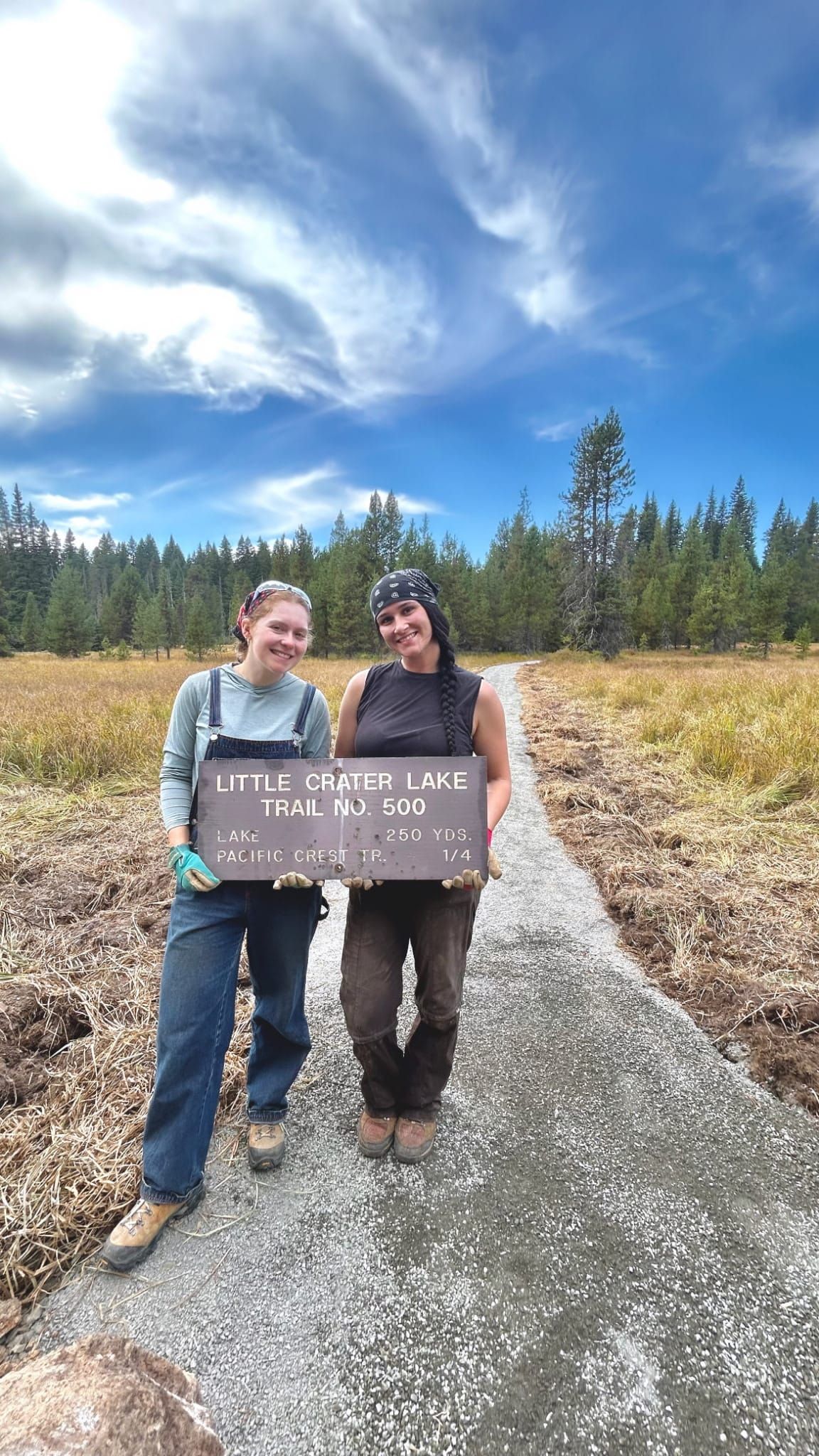
I serve as AntFarm’s Public Lands Program Manager. This year, we’ve taken on two trail restoration projects. One crew rebuilt the trail to Little Crater Lake, which connects the campground and trailhead to the lake and the Pacific Crest Trail, in the Mt. Hood National Forest. It’s not a true lake, but a 45-foot-deep pool of crystal clear artesian spring water. The quarter-mile trail, which had been in disrepair, is now ADA-compliant from the trailhead to the lake, and beyond the lake offers wider, safer passage to the Pacific Crest Trail.
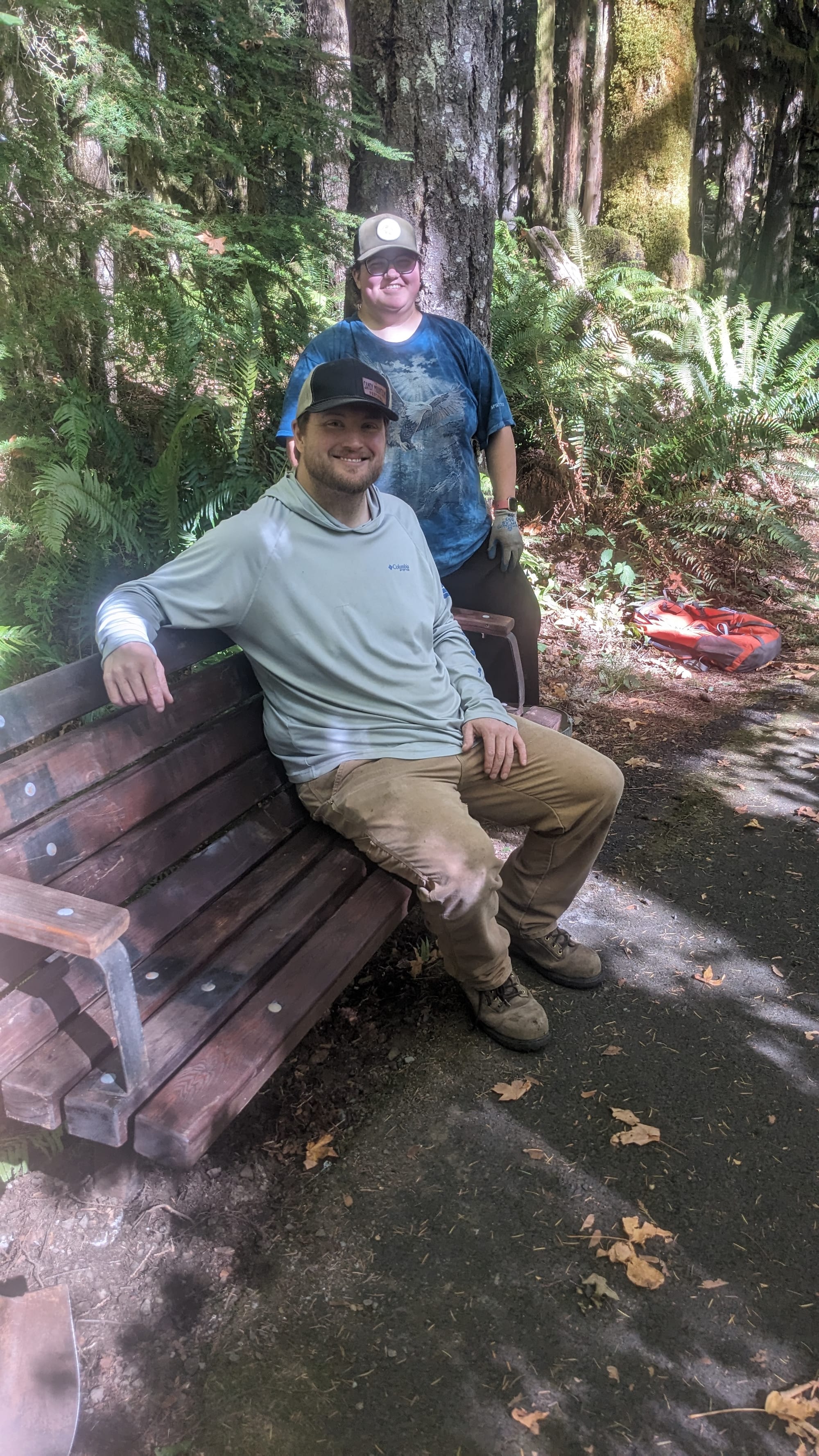
An AntFarm crew also is in the process of rebuilding the Wetlands Trail, an accessible, 3/4-mile loop trail that features a boardwalk with views of wetland plants, fish, birds, and other critters, including a beaver pond that is currently without beavers. The crew is replacing worn and broken boardwalk timbers and restoring benches and signs. The old pressure-treated planks and rails are being replaced with untreated western red cedar, a naturally rot-resistant wood.
I asked two AntFarm employees to reflect on their experiences on the trails this year: trail crew leads Camille Housh and James McGraw.
Housh came to AntFarm with experience in an AmeriCorps program called NCCC ForestCorps, and she worked on the El Dorado, Ochoco, Plumas, and Mt. Hood National Forests.
“This job is great if you’re somebody who can appreciate what a privilege it is to work outside in beautiful spaces all day. The work is hard, so you feel tired at the end of the day. But I think with the cool things we’re learning and the amazing places we’re working, it is a privilege to do this kind of work and it’s definitely work that’s needed,” said Housh. “The great thing about this job and about working for Ant Farm is that you don’t have to come with all the skills, but you do need to come with a willingness to learn and a good attitude, and you can get a lot out of this work.”
Housh added that she values the range of skills she has acquired.
“I’ve gotten to use so many different tools and heavy machinery and learned so many tricks for how to do things. I had to brush up on some of my math and physics skills too, to help me understand what we were working on. I’m just grateful for all of the knowledge that I accumulated this summer, and I think it’ll be useful for the rest of my life,” she said.
For McGraw, a forestry student at Mt. Hood Community College, this summer’s work fulfilled the on-the-job experience required to earn his degree.
“I’ve only been back to class a couple weeks now, but the number of times I’ve been able to chime in with something I experienced over the summer, learned over the summer, has really has contextualized a lot of what we go over in the natural resources courses, from staffing of our parks, responding to wildfires, and the day-to-day operations,” he said. “The need for maintenance is never-ending in our parks and forests. To have been part of that with AntFarm was very, very cool.”
Housh and McGraw hope to return to AntFarm next year.
Both trail projects involved significant contributions of time and resources from numerous partners. Little Crater Lake: the Clackamas County Tourism Development Council, Access for All, Alaska Recreation Management, O’Malley Brothers, David Linn Trucking, the Mt. Hood National Forest, G. Tilgner, K. Walker, and M. Fitzgerald. At Wildwood, the nonprofit Trail Keepers of Oregon provided construction staff and training over many days, and Wildwood staff offered a range of assistance and encouragement. My thanks to all of you!
Have a question about Wildwood or Little Crater Lake? Know why swimming in the lake is prohibited? Email: SWilent@gmail.com.