

Blacksmith Week Celebrates a Craft Forged Through Generations
By Marie Kennedy, The Mountain Times
For more than four decades, Darrell Nelson has helped add new ironwork to Timberline Lodge with one goal in mind: Make it look as though it has always been there.
"We strive very hard for people not to be able to tell the difference," Nelson said.
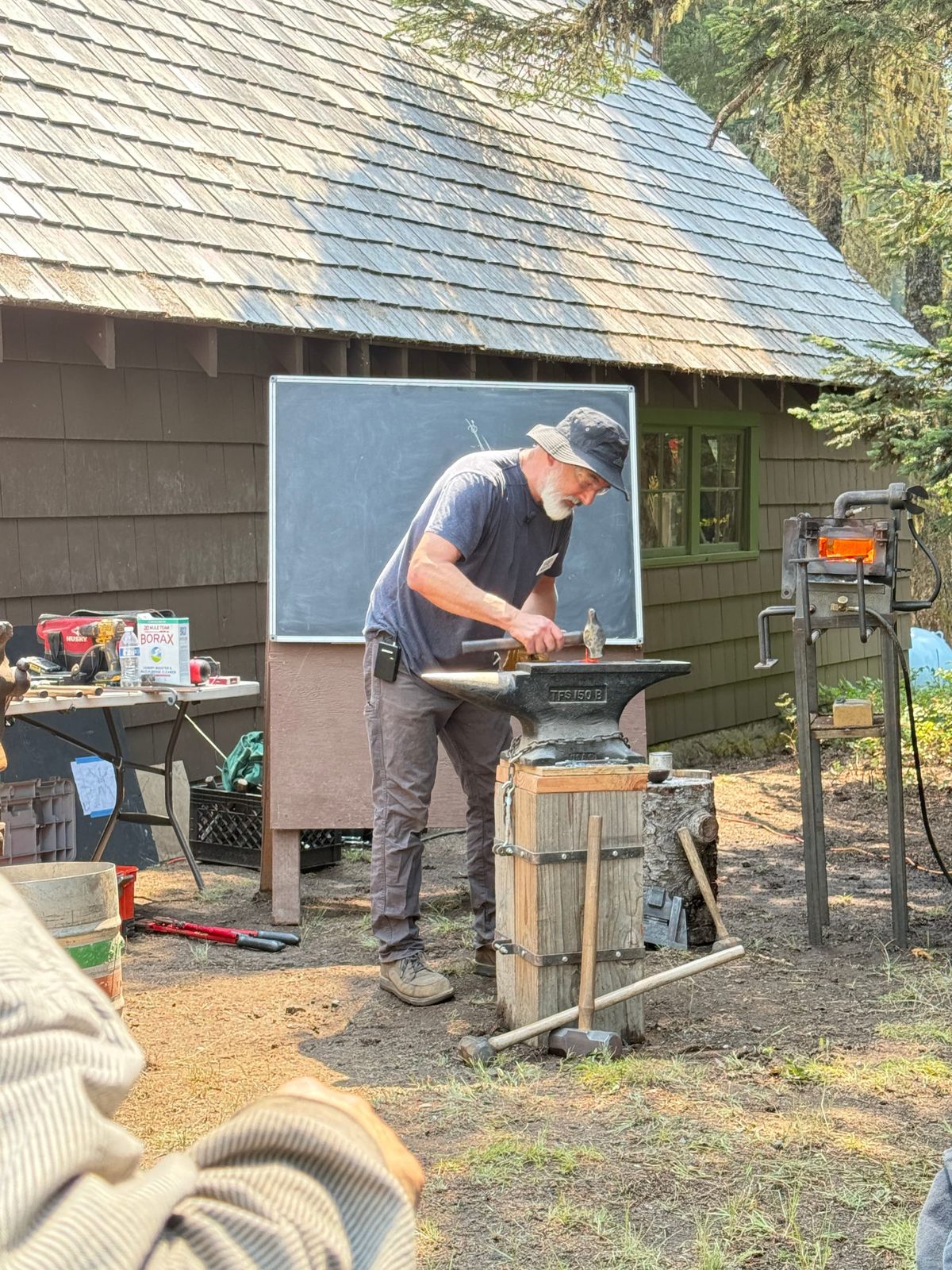
Nelson, 73, was among the veteran blacksmiths who gathered in Government Camp for Blacksmith Week, the annual gathering hosted by the Cascadia Center for Arts & Crafts Aug. 12-16.
The multiday event brought a changing lineup of blacksmiths to the forge, with different demonstrations and activities throughout the week. This year's featured blacksmiths included Nelson, Patrick Maher, Aaron and Jesse Bushey, Joe Elliott, Evan Scott, and Ben Czyhold.
For Nelson, Blacksmith Week also brought him back to Government Camp, where he has spent much of his working life.
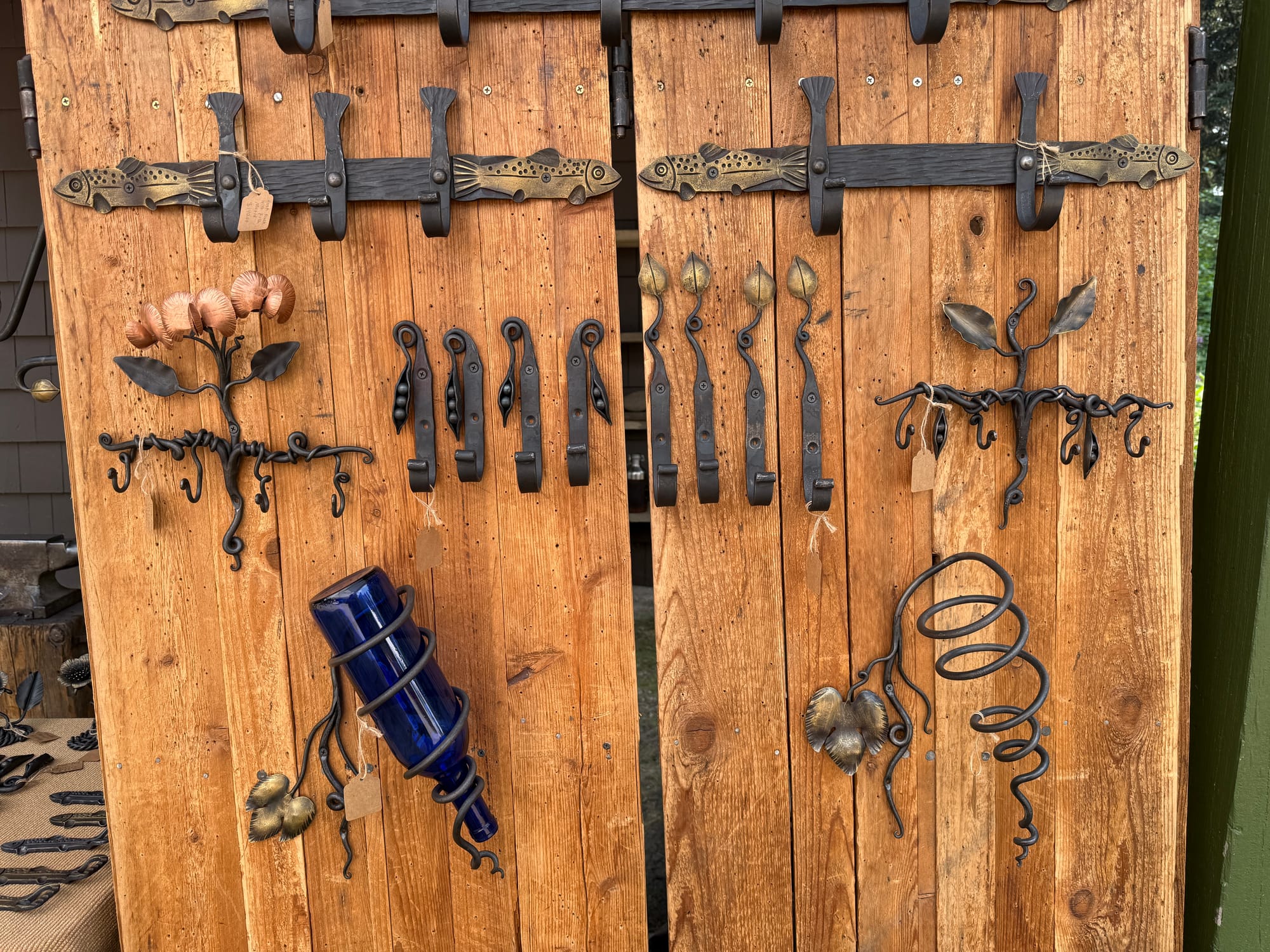
He began doing work for Timberline Lodge in 1985 and said the amount of ironwork at the lodge has roughly doubled since then. Nelson's business has employed other blacksmiths over the years, but he has remained closely involved with the lodge and continues to make the drive from his home in Washington.
His path to blacksmithing began with horses.
Nelson originally thought he wanted to become a veterinarian, but after considering the years of schooling ahead, he chose another way to work with animals and enrolled in farrier school in Washington.
There, he met another student who had attended a blacksmithing school in Santa Fe, New Mexico, and brought examples of ornamental ironwork Nelson had never seen before.
He was fascinated.
After completing their assigned horseshoeing work, Nelson and other students began straightening horseshoes and experimenting with making hooks and other objects.
"I found I liked beating on the steel better than holding up the horses," Nelson said.
He continued shoeing horses for about 13 years while building his blacksmithing business.
Around the same time, he met Russell Moggans, whom Nelson described as the second-generation blacksmith at Timberline. Nelson came to be known as the third generation, continuing a tradition of creating new work that complements the lodge's original 1930s ironwork.
Some of that work was added for practical reasons.
Nelson said handrails were installed along lodge stairways that originally had none. Later, changes required under the Americans with Disabilities Act meant replacing room hardware so doors could be opened with a single downward motion of one hand, operating both the latch and deadbolt.
The challenge was meeting modern needs without making the new work look modern.
Over the years, Nelson and those working with him have also created large gates, railings at the Blue Ox Bar and extensive ironwork at Silcox Hut.
When Nelson first became involved with Silcox, he said there was relatively little ironwork there.
"Now it's coated in ironwork," he said.
One of Nelson's continuing Timberline jobs does not involve iron at all.
He replaces the woven rawhide seats on some of the lodge's chairs, ordering half-hides and cutting long, continuous strips of rawhide before weaving them into place.
Although he now considers himself partly retired and generally works three or four hours a day, Nelson still returns to Timberline and Silcox to make repairs and occasionally add new pieces.
That combination of traditional skills, artistic work and practical problem-solving was on display throughout Blacksmith Week.
Each day offered something different.
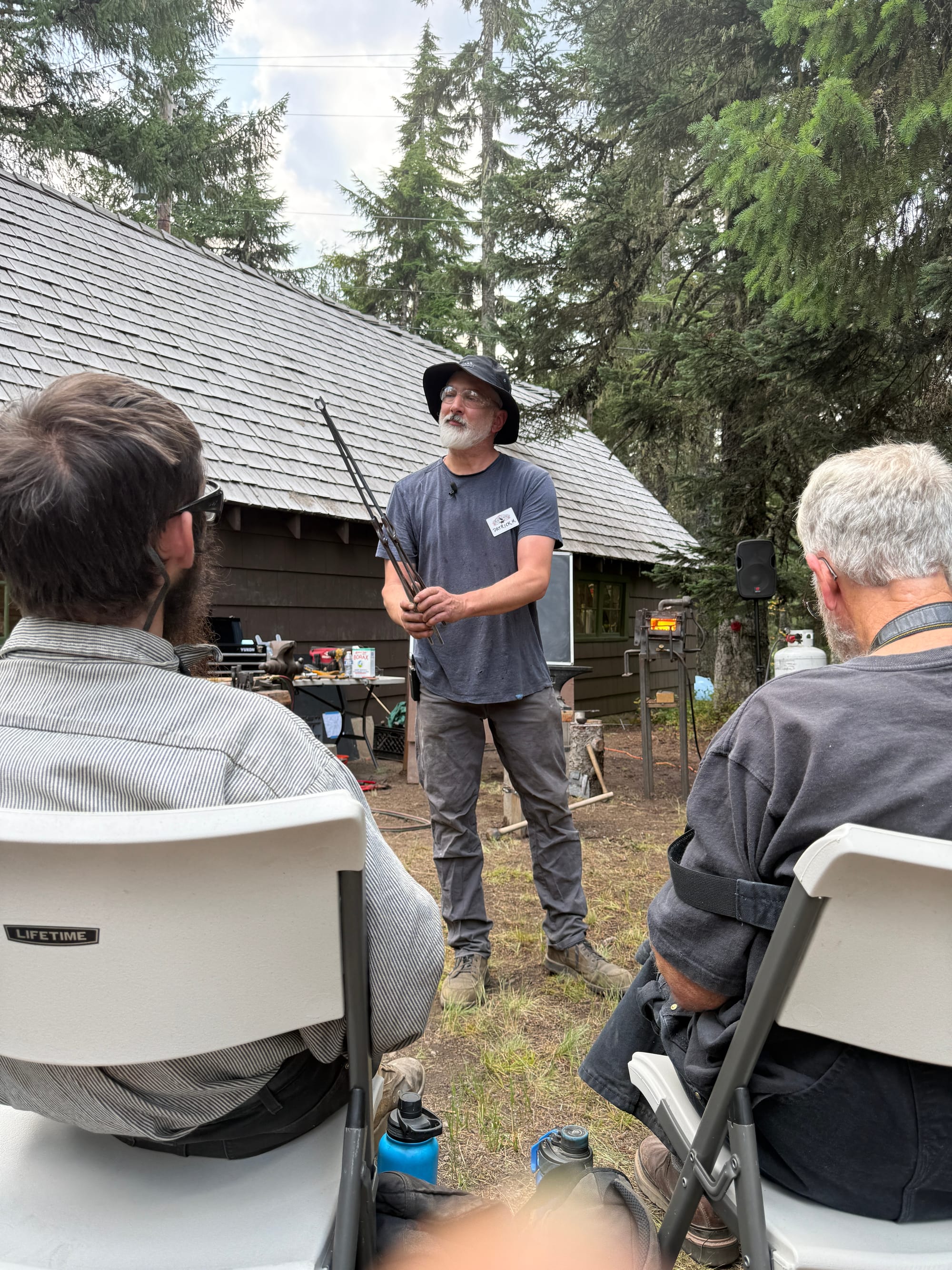
Nelson was featured in a Thursday evening demonstration. Over the following days, Aaron and Jesse Bushey of Bushey Ironworks, Maher of Blu Skillet Ironware, Elliott of Dry Canyon Forge, and Scott of Knob Hill Forge took turns at the forge, while Czyhold of Artificer Forge offered free public demonstrations.
The schedule also included an open forge and propane campfire Friday evening and a potluck and social gathering Saturday.
Maher has worked with metal for more than 30 years as both an artist and blacksmith. After studying a range of art forms, he became drawn to blacksmithing and went on to work in architectural ironwork, metal fabrication and public art. He later co-founded Blu Skillet Ironware, which produces hand-forged carbon-steel cookware, while continuing to create sculptural work of his own.
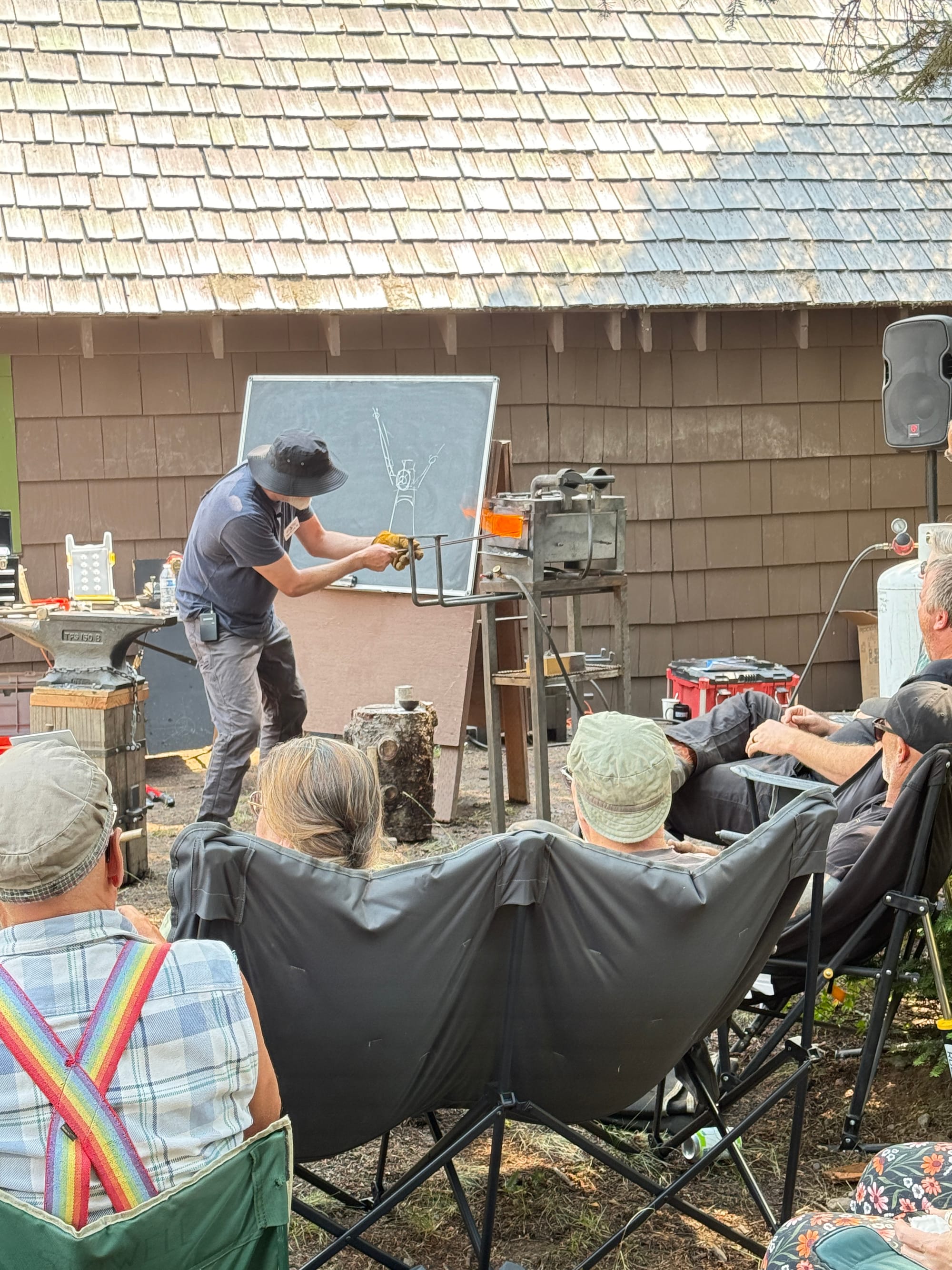
Czyhold, of Kennewick, Washington, has operated Artificer Forge since 2007. His work ranges from architectural pieces such as hinges, hooks, railings,and gates to sculpture, tools and historical reproductions. His public demonstrations gave visitors a chance to watch traditional forging without registering for the full event.
CCAC treasurer Noelle Newton is also a multidisciplinary artist with a background in fine metals, blacksmithing and sculpture. She operates RoseGate Studio in Hood River, where her work includes jewelry, fiber art, sculpture, handbags, and other pieces inspired by a range of materials and techniques.
Blacksmith Week has been held for about 21 years, Nelson said, with a multiyear interruption during the COVID-19 pandemic.
The setting adds another layer of history. The Cascadia Center operates on U.S. Forest Service property under a special use permit, on grounds that once served as a Civilian Conservation Corps camp and later a Forest Service compound.
Today, the old buildings and blacksmith shop are used to keep traditional arts alive.
For Nelson, that idea of carrying a craft forward has been part of his work at Timberline for 41 years.
Visitors walking through the lodge can see the gates, railings and hardware added over those decades.
But if Nelson and the blacksmiths who worked with him did the job the way they intended, most will never know which pieces were forged in the 1930s and which came many years later.