
What Forests Teach Us About Time
By Dr. David Wenzel, For the Mountain Times
One of the unexpected things I've learned from managing a small woodland is that trees have completely changed the way I think about time.
Humans tend to measure life in short increments. We worry about next week's meeting, this month's bills, or this year's goals. Even our longest plans usually stretch only a few years into the future.
Trees are operating on an entirely different schedule.
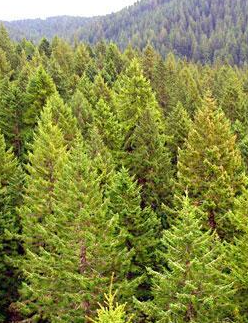
A Douglas-fir seedling may spend its first decade looking almost insignificant. Fifty years later it has become a respectable tree. At one hundred years it is mature. At three hundred years it is just beginning to acquire the massive limbs, thick bark, and quiet presence that make old-growth forests so breathtaking.
To a tree, my entire lifetime is little more than a season.
That realization has been strangely comforting.
When I first began caring for our woodland, my lifetime, a human lifetime, was my frame of reference. I didn’t understand that a 60 year old Fir was just getting started. 60 years seemed like such a long time in the context of a human lifetime. Plans for trees to provide shade or maybe a privacy screen of sorts require great patience. In reality, I won’t enjoy the shade from trees I’m planting this year.
The forest politely ignores my human timetable, and reminds me that healthy things often grow slowly.
Year after year our PNW conifers quietly add another ring. So slowly that I often don’t see the difference from one season to the next. Yet twenty years later the transformation is undeniable.
The same is true of people.
Strong marriages are not built in a weekend, a month, or even a year. Children don't become confident adults because of one great conversation. Communities aren't strengthened by a single volunteer day. Trust, wisdom, and character all grow much like forests - almost imperceptibly at first, then remarkably over decades.
Living among trees has also taught me that not everything worth doing will benefit me personally.
Every time I plant a Douglas-fir, I know I will never see it at its full potential. Someone else will stand beneath its shade. Someone else may admire its height or mill its lumber generations from now.
Oddly, that doesn't make the work less meaningful. It makes it more meaningful.
Perhaps we never really own a forest. We simply enter its story for a few decades. Our task is to honor those who shaped it before us and leave something worthy for those who will one day walk beneath these same trees.
Perhaps that's one of the greatest gifts forests offer us: They invite us to slow down.
They remind us that a meaningful life isn't measured only by what we accomplish this month or this year. Some of the most important work we ever do - raising children, caring for forests, building friendships, strengthening communities - is measured in decades.
The mountain communities understand this better than most. The forests surrounding us have stood through floods, fires, harsh winters, and generations of people who have come and gone. They have witnessed more history than any of us ever will.
Maybe that's why time seems to move a little differently here.
The trees quietly remind us that while our days are short, our influence doesn't have to be. Like the forests themselves, the things we nurture with patience today may become the legacy someone else enjoys tomorrow.
Dave Wenzel has lived in the Mt. Hood community for more than 30 years, where he and his wife, Hollis, care for a 20-acre woodland they affectionately call the "20 Acre Wood." His days are spent managing the forest, planting trees (including as many redwoods as he can before he dies), welcoming guests to their Treehouse, and appreciating the lessons that nature has to teach about life, community, and meaning.