

When You Look at a Tree, What Do You See?
By Dr. David Wenzel, For The Mountain Times
For most of its life, a tree’s work is easy to see.
A Douglas fir spends decades reaching toward the sky, adding a new ring each year. It turns sunlight, soil, and water into wood, pulls carbon from the atmosphere, shades the ground beneath it, shelters birds, feeds insects, and sends roots deep into the earth. Given enough time, it may rise 150 feet or more above the forest floor.
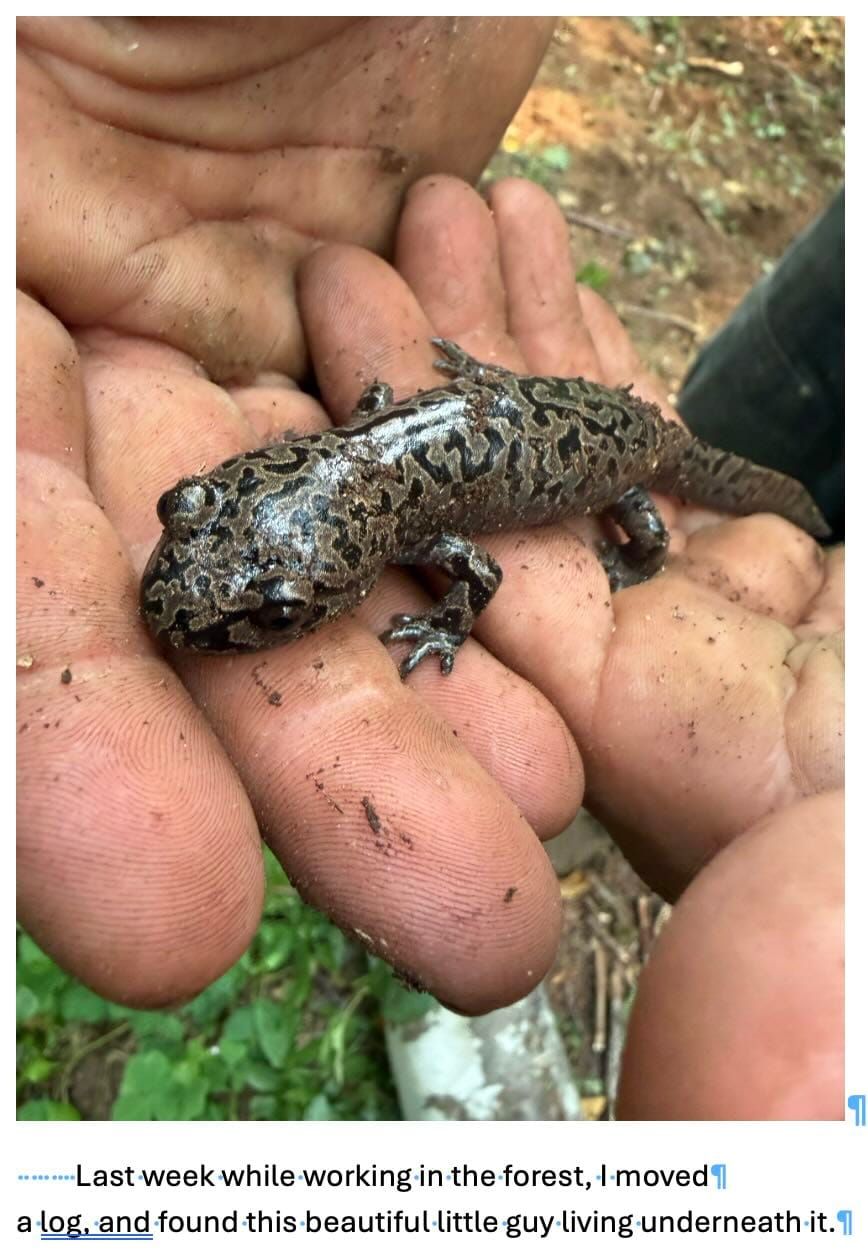
And then, one day, it falls. We might be inclined to think its work is finished. The forest would disagree. Almost immediately, the tree begins another kind of work. Beetles tunnel beneath its bark. Fungi penetrate the wood. Mosses spread across its surface. Salamanders find shelter beneath it. Its decaying wood absorbs water like a sponge, holding moisture long after the surrounding forest has dried.
Eventually, seedlings may take root on the fallen trunk. The tree that once competed with its neighbors for sunlight now provides a place for the next generation to grow.
And slowly, almost imperceptibly, the tree becomes soil. Pick up a handful of that soil and it may not look particularly remarkable. A little dirt. Some crumbling wood. A few needles. But that handful contains a delightfully astonishing living world.
A teaspoon of healthy soil can contain billions of tiny living things. Bacteria, fungi and other organisms live together in a busy world that we cannot see. They help each other, communicate with each other, eat each other and compete for space and food. And that competition has given humans an unexpected gift: medicine.
Many of our antibiotics got their start from tiny organisms that live in soil. One group of bacteria, called Streptomyces, makes chemicals to fight off other bacteria. Scientists discovered that some of these same chemicals can also kill the bacteria that make people sick.
Streptomycin, one of the first effective treatments for tuberculosis, came from a soil bacterium. Tetracyclines, erythromycin, and neomycin have similar origins. Penicillin came from a fungus. Other fungi eventually gave us compounds that led to cholesterol-lowering statins and medicines that made organ transplantation possible.
None of these organisms were trying to make medicine for us. They were simply participating in the ancient, wonderfully complicated business of being alive. I think about that when I walk through our forest and step over a fallen tree.
We humans tend to have rather particular ideas about usefulness. We admire things that are growing, producing, and accomplishing. A towering Douglas fir looks productive. A rotting log can look like something whose best days are behind it. A forest makes no such distinction. We have several huge Douglas firs laying down in our forest. I would estimate that at one time they had a 48” diameter and stood perhaps 200 ft tall. They likely fell 70 years ago. Today they are pulsating with life as they slowly, so slow I can’t see it, return to the earth.
The tree may spend a century or more growing vertically, bulking up, becoming the tree we recognize, and then spend decades becoming everything else. Its wood becomes fungus and soil. Its nutrients become new trees. Its hollow places become homes. Carbon gathered from the atmosphere a century earlier enters another chapter in an ecological story that was underway long before we arrived.
Perhaps there is something worth noticing in that. The next time you step over an old log, consider what is happening beneath your feet. That tree once spent its life reaching toward the sky. Now it is participating in an equally wondrous world below, a world which the standing trees depend on.
In a forest, life is beautifully complex.
Dave Wenzel has lived in the Mt. Hood community for more than 30 years, where he and his wife, Hollis, care for a 20-acre woodland they affectionately call the "20 Acre Wood." His days are spent managing the forest, planting trees (including as many redwoods as he can before he dies), welcoming guests to their Treehouse, and appreciating the lessons that nature has to teach about life, community, and meaning.