

The Amazing Literary Adventures of Amber and Eleanor the Cat
It’s not often a work of fiction haunts the innermost workings of Eleanor’s literary background. And it’s almost never that a work of fiction has her questioning everything she’s ever understood about accredited authors. But Jodi Picoult’s, “By Any Other Name” not only had us furiously page turning
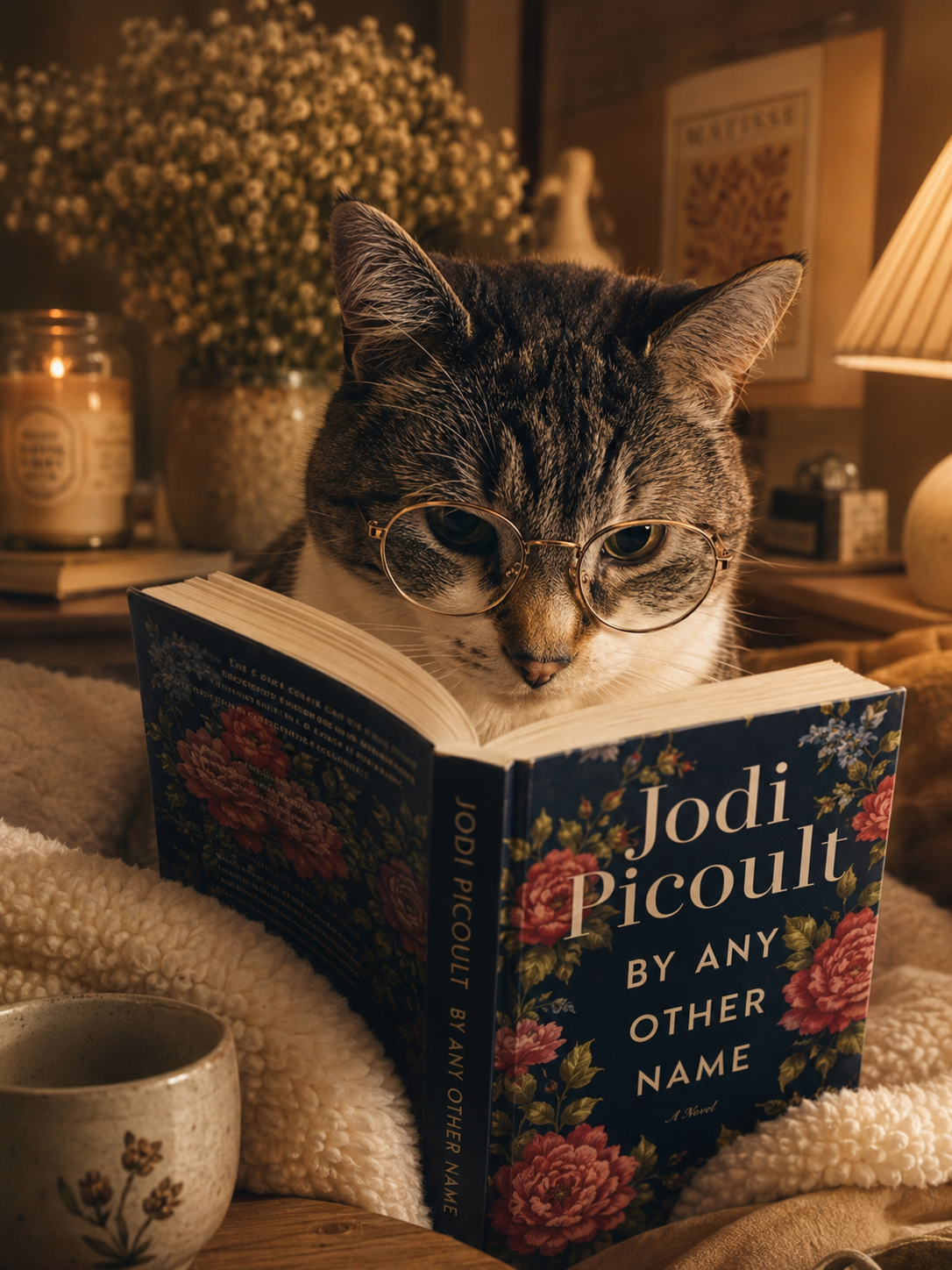
Jodi Picoult, “By Any Other Name” July 2026
By: Amber Ford, The Mountain Times
It’s not often a work of fiction haunts the innermost workings of Eleanor’s literary background. And it’s almost never that a work of fiction has her questioning everything she’s ever understood about accredited authors. But Jodi Picoult’s, “By Any Other Name” not only had us furiously page turning, but also examining recent skepticism of the world’s most notorious playwright, William Shakespeare.
Known for her suspenseful and intense novels, Picoult keeps that momentum going with this historical fiction work that time-travels between present day New England and Elizabethan London. Using two very similar and headstrong female characters, Picoult creates a world where readers not only feel connected to both, but feel the weight of each challenge and decision they make.
Picoult’s research into characters during the Bard’s career is perhaps the most intricate analysis Eleanor has ever read. Referencing female ghostwriters and the real-life professional battles between Shakespeare and playwright Christoper (Kit) Marlowe, Picoult mastered the dialogue beautifully. While no definitive proof of Shakespeare’s ghostwriters exists, Picoult examined plausible theories supporting the Anti-Stratfordians (a real life group who believed Shakespeare was a frontman for the work of others). The complex breakdown of Shakespeare’s life, juxtaposed upon his work, was damning, and could likely turn this historical fiction novel into an expose of the aforementioned ghostwriters. The author’s research into Shakespeare’s life and the detail with which he describes places such as Denmark (Hamlet) and Italy (Romeo and Juliet) provides readers with one powerful question: If Shakespeare admittedly never traveled to these places, how did he write so eloquently about them?
Eleanor is baffled.
While the plot of “By Any Other Name” relies heavily on exposing the Bard’s potential sleight of hand, true to Picoult’s writing, the backstory of both female characters is powerful and inspiring. Characters of days present and past are generational relatives, overcoming challenges as female writers. And while much has changed and advanced for females in the literary world, Picoult manages to still identify inequality in the profession present day. As Picoult does with many of her female characters, she gives them hope and inspiration as they struggle to make their dreams a reality. Love stories waft between chapters and times, and Picoult’s construct for both characters was to use their pain, anguish, and struggles as motivation to press on, despite the “man’s world” challenges they faced (Eleanor and I do not have these struggles within our tight, all-female household).
As with any good book, “By Any Other Name” left Eleanor and I with questions for each chapter. Torn between accusations leveled at the Bard and our own determination to write creatively and with purpose, Picoult’s work inspires us, not just with our own creativity, but as females still working to break down the barriers of this man’s world.